
Same-day ballot tabulation in Arizona: how on-site counting works
· 6 min read
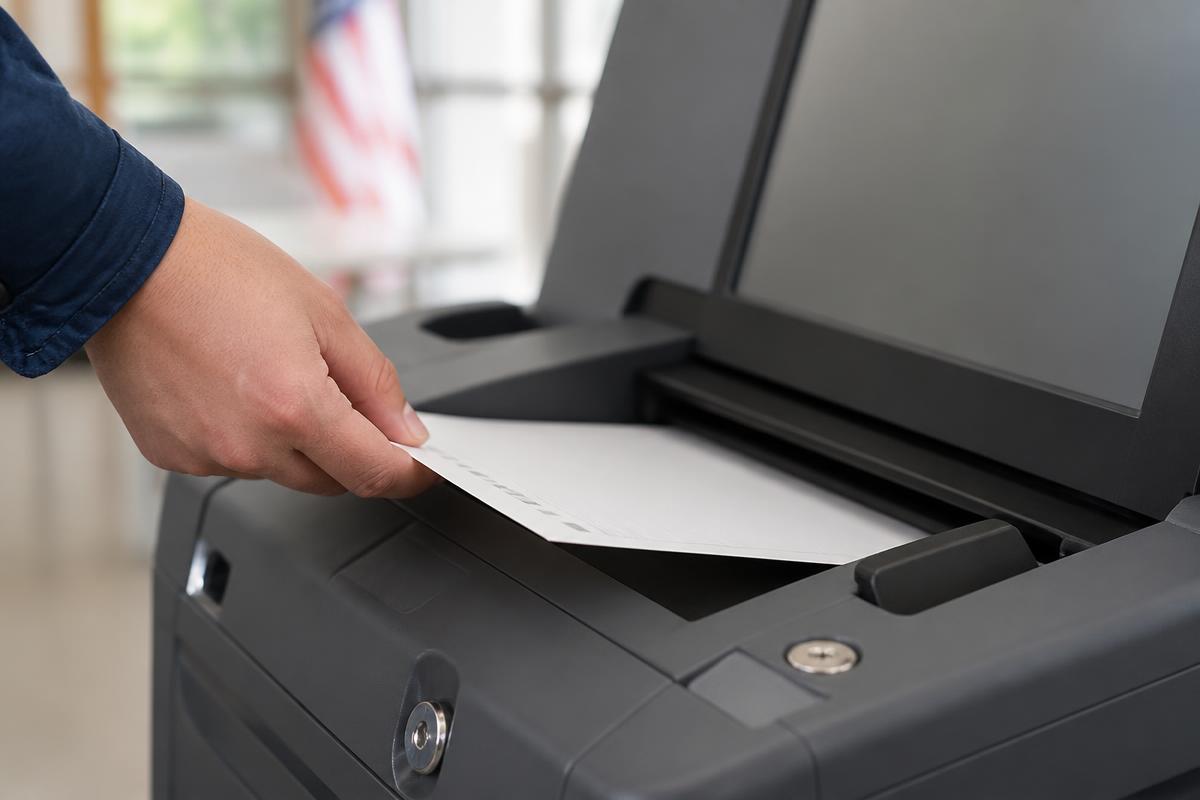
On-site tabulation sounds novel if you vote by mail, but it is the ordinary experience of every Arizonan who has voted at a polling place and fed their ballot into a scanner.
The mechanics
At the voting location, your identity is verified, you are checked against the poll book so you cannot vote twice, and your ballot is inserted into a precinct tabulator. The machine records the votes and drops the paper ballot into a sealed box. The paper is retained for audits and recounts; the digital tally is transmitted after polls close.
Ballot secrecy is preserved because the tabulator reads an anonymous ballot, your identity was confirmed before you received it, not encoded on it.
Why it is faster
Central counting requires transport, intake, envelope verification, sorting, extraction and batching before a single ballot is read. On-site tabulation collapses those steps into the minute you are standing at the machine. When polls close, those ballots are already counted.
It has already been used in Maricopa County
On-site tabulation is not a theory in Arizona. Maricopa County has run tabulation at voting locations, and reporting on the 2026 primary examined how it affected the pace of results. Read the coverage and the county's own materials rather than taking a campaign's word for it.
The tradeoff to consider
On-site tabulation asks the voter to show up, which is why Prop 144 makes it an option rather than a mandate. Voters who prefer mail keep mail. The measure is designed to give the fastest path to those who want it without closing the convenient one.
Frequently asked
Check the primary sources
This page is published by the Yes on 144 campaign. Read the measure and the official ballot materials yourself:
- HCR 2001 measure text, Arizona Legislature
- Official ballot language + publicity pamphlet
- Register, update your address, track your ballot
Read our full breakdown of what Prop 144 does.